Image


Chef and culinary stylist Ashton Keefe recently presented an exclusive series to Related residents to work on different sets of cooking and kitchen skills. Keefe’s knife skills class taught attendees essential knife cuts, how to invest in quality knives, and proper knife care. The dressings and sauces class reviewed the classic French “mother sauces” and how to use them in everyday cooking. Finally, the searing and grilling class included expert techniques for cooking with heat and advice on using those skills to elevate your home cooking.
Below, Keefe reviews the techniques taught in her classes and shares accompanying recipes to help practice them at home.
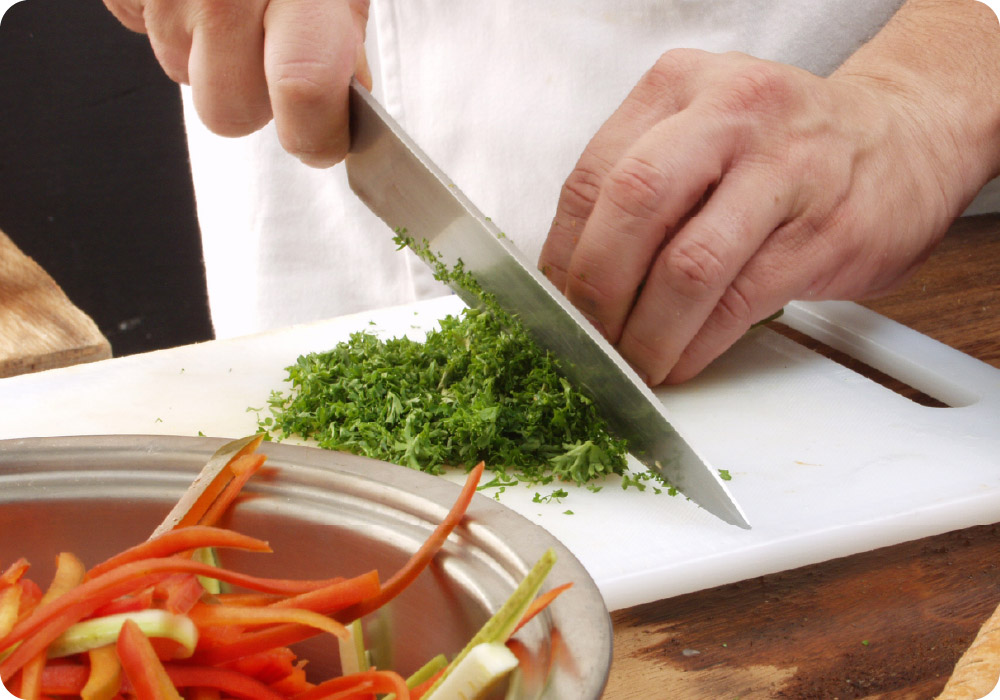
1. A Sharp Knife Is Safer Than a Dull One
• Hone frequently
• Sharpen regularly
2. Use the Right Knife
You only need three to do almost everything:
• Chef’s knife (8–10")
• Paring knife
• Serrated knife
3. Grip Properly (Pinch Grip)
• Thumb and index finger on blade
• Remaining fingers around handle
This gives control, not just force.
4. The Claw Hand
Your guiding hand should:
• Curl fingertips under
• Knuckles forward
• Blade rests lightly against knuckles
Your knuckles guide the knife. Fingertips stay protected.
5. Create a Stable Base
Before cutting:
• Trim a rounded ingredient so it sits flat
• Stability prevents slips
6. Let the Knife Do the Work
Use smooth slicing motions. Avoid pressing straight down. Most cuts are forward-and-down or rocking motions.
7. Keep Your Tip Down (When Appropriate)
For herbs and small items:
• Keep tip on board
• Rock through the food
8. Work Deliberately, Not Fast
Speed comes from repetition. Precision comes first. It goes: safety, speed, creativity.
9. Keep Your Board Stable
Place a damp towel under your cutting board. Movement equals danger.
10. Respect the Blade
• Don’t scrape food with the sharp edge—flip the knife and use the spine.
• Don’t leave knives in sinks.
• Store properly.
1. Slice. A broad term for cutting food into flat pieces.
• Can be thin or thick
• Often used for onions, tomatoes, citrus, meat
2. Chop. Rough, informal cut.
• Pieces are irregular
• Used for rustic dishes, stocks, braises
3. Dice. Uniform cubes. Precision matters.
• Large Dice – 3⁄4-inch cubes
• Medium Dice – 1⁄2-inch cubes
• Small Dice – 1⁄4-inch cubes
4. Mince. Very fine, small pieces.
• Used for garlic, shallots, herbs
• Often done by rocking the knife repeatedly through the ingredient
5. Julienne. Thin matchstick strips.
• About ⅛ inch × ⅛ inch × 2 inches
• Foundation for more refined cuts
6. Brunoise. Very fine dice.
• ⅛-inch cubes
• Made by julienning first, then cutting crosswise
7. Batonnet. Stick cut.
• 1⁄4 inch × 1⁄4 inch × 2 inches
• Think classic French fry shape
• Often the base for medium dice
8. Chiffonade. Fine ribbons.
• Used for leafy greens and herbs
• Stack leaves, roll tightly, slice thinly
9. Bias Cut. Slicing at an angle.
• Creates more surface area
• Used for carrots, scallions, sausages
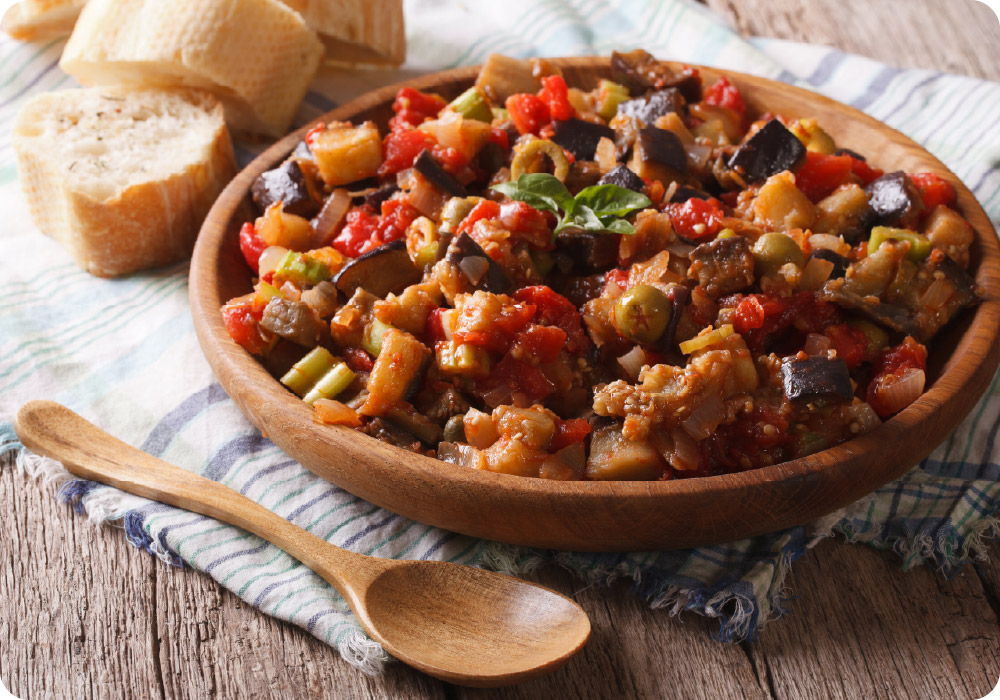
Makes 1 quart
This is the quintessential Italian fridge-pantry staple. It can be used for sandwiches, pastas, salads, or as a side. It goes on everything and with everything. It’s also a great way to practice knife skills since this dish can be prepared more “rustic” with larger cuts or refined with small, brunoised cuts.
Ingredients
2 to 3 tablespoons extra-virgin olive oil, plus extra depending on desired consistency
1 large eggplant, diced
2 stalks celery, diced
1 onion, diced
1 carrot, diced
Salt, to taste
2 tomatoes, diced
3 cloves garlic, smashed and minced
1⁄4 cup capers
Directions
Heat a large skillet over medium-high heat and add the eggplant. Allow the eggplant to sit, undisturbed, until browned, about 5 minutes. Stir and repeat until all the sides are nicely brown and the vegetable has reduced in size.
Add the celery, onion, and carrot and cook until just tender. Season with salt. Add the tomatoes, garlic, and capers and cook for 2 to 3 minutes, or until the garlic is fragrant. Season again with salt and reduce the heat to medium-low.
Allow the mixture to simmer and come together for as long as you have, adding more olive oil as needed to create a relish-like consistency. Enjoy warm, cold, or at room temperature.
Makes 3 cups
Homemade salsa can be such a fresh dish to add to a summer table for chips, tacos, or as a grilled fish garnish. I love using different types of tomatoes and playing with the spice level by adding more or less jalapeno (and its seeds).
Ingredients
4 large tomatoes, diced
1⁄2 white onion, diced
2 limes, juiced
1 jalapeno, minced
3⁄4 teaspoon salt
1⁄2 bunch cilantro, roughly chopped
Directions
Mix the tomato, salt, lime, and jalapeno in a bowl. Season with the salt and fold in the cilantro. Can be enjoyed immediately or made in advance, and will last, covered.
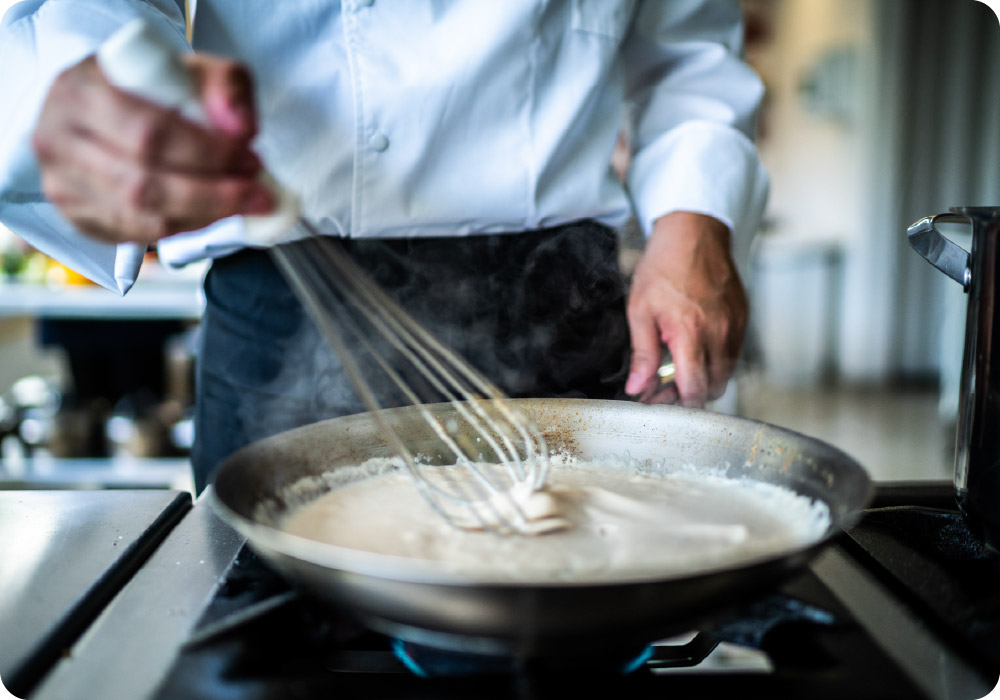
French "mother sauces" are dressings and sauces that can be applied to everyday cooking. For example, a béchamel sauce can be used in mac & cheese, lasagna, or a Croque Madame, while espagnole pairs well with braised short ribs and beef bourguignon.
Béchamel: Roux + Dairy (milk or cream)
• Mac & Cheese, Lasagna, Croque Madame
Velouté: Roux + Chicken (or Fish) Stock
• Chicken Pot Pie, Biscuits & Gravy
Espagnole: Roux + Beef (or dark) Stock
• Braised Short Ribs, Beef Bourguignon
Tomato: Roux + Tomato
• Generally, only in French terms, Italians don’t use this style.
Hollandaise: Egg Yolks + Clarified Butter + Acid
• Eggs Benedict
Makes 1 cup
Ingredients
2 tablespoons butter
2 tablespoons flour
1 cup whole milk
Salt
Pepper
Nutmeg
Directions
Melt butter in a small saucepan or skillet. Add flour and whisk to cook off floury taste, 1 minute. Whisk in milk and cook until thickened and coats the back of a spoon. Season.
Serve with mac & cheese.
Serves 2
There’s something delightfully cute and contained about poached eggs and hollandaise sauce. It’s both celebratory and incredibly simple looking and tasting. Like anything else with minimal ingredients, quality is always important. The food stylist’s secrets are to “double yolk” your eggs and stack the ingredients, helping you create dramatic height and an elevated feel of fanciness.
For the eggs:
4 eggs
Salt
1 English muffin, halved and toasted
4-5 slices of prosciutto, thinly sliced
2-3 handfuls of spinach, sautéed down, producing about 1⁄2 cup total
1 cup pan-roasted mushrooms, roughly chopped
Extra-virgin olive oil
Finishing salt, such as fleurs de sel or Maldon
For the Hollandaise:
1 egg yolk
Salt
Juice of 1⁄2 lemon
1 stick of butter, melted and cooled slightly
Directions
Heat a small saucepan filled with water to a boil. Using a small bowl, place a long piece of saran wrap over the top of the bowl and spray the interior of the bowl (now covered with plastic wrap), with cooking spray. Add 2 eggs to the bowl and then using the saran, press out excess air and tie off to create a double yolk. Repeat for the second two eggs.
Place egg in boiling water and cook for 7-8 minutes. Remove and cool slightly before removing from the saran wrap.
While the eggs cook, make the sauce. Place an egg yolk in a medium bowl and season with salt and lemon juice.
Using a whisk, beat the egg as you hold the bowl over the pan of hot water. The egg will begin to get light in color. Continue to beat until egg yolk mixture is just hot to the touch.
Remove bowl from the heat and slowly whisk while you pour in the melted butter, a drop or two at a time. Season again with salt and set aside, keeping warm until eggs are done.
Place prosciutto slices on a toasted English muffin half and then layer with sautéed spinach, mushrooms, and egg. Top with sauce and garnish with more salt and a drizzle of extra-virgin olive oil. Serve while hot.
To make the sautéed spinach: heat a small skillet up over medium heat and add a touch of olive oil. Place spinach in pan and season with a sprinkling of salt. Stir until spinach is wilted and remove from heat.
To make the pan-roasted mushrooms: wipe out that same small skillet you used for the spinach and heat over medium heat—do not add any fat to the pan. Add whole mushrooms and “pan roast” until charred on all sides.
Remove from heat and place mushrooms on a board, roughly chop and season well with salt and extra-virgin olive oil.
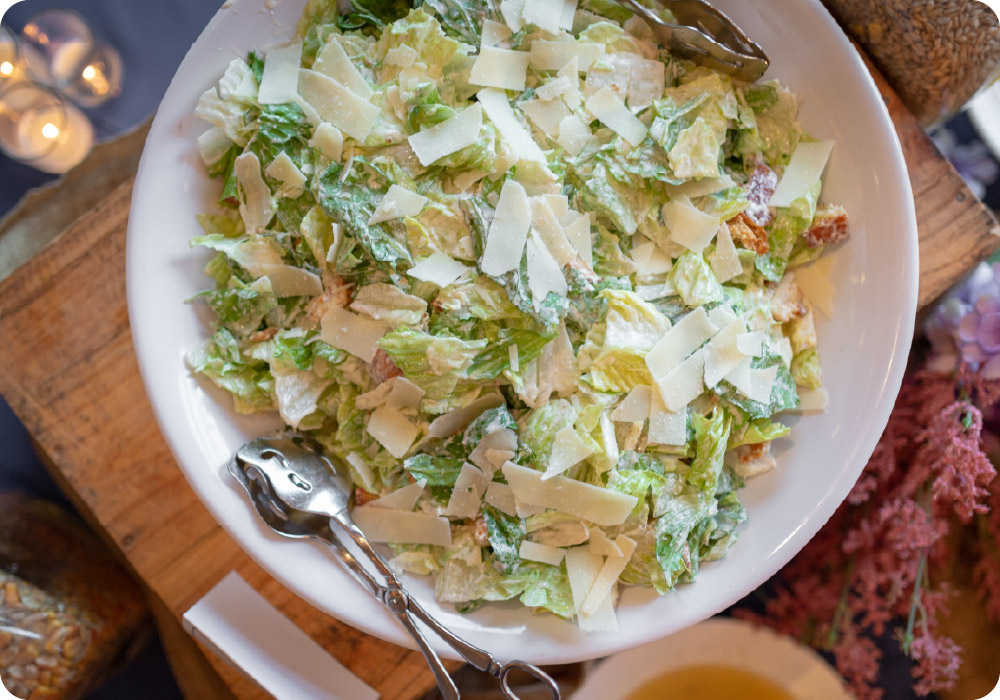
Serves 4
Directions
Chop together 1-2 anchovies + 2-3 cloves garlic and plop at the bottom of a large bowl with 2 diced shallots. To it, add the zest and juice of a lemon, an egg yolk, a huge spoonful of Dijon, and salt.
While whisking, stream in extra-virgin olive oil (between 1/3-1/2 cup), coating the sides of the bowl until thick and creamy. Add Parmesan cheese and more salt, taste it!
Then add chopped romaine, chives, frozen and thawed peas, and more cheese. Toss to coat and add more cheese, salt, and pepper.
Ingredients
1 shallot, minced
1⁄2 teaspoon salt
1 lemon, zested and juiced
1 tablespoon Dijon mustard
1⁄4 cup extra-virgin olive oil
Directions
Place the shallot in a bowl and macerate with the salt and lemon zest/juice. Whisk in the mustard and olive oil until emulsified.
Serves 2
Ingredients
2 filets or strip steaks
Salt
Freshly cracked black pepper
Vegetable oil
1 tablespoon butter
Thyme
1 garlic clove
1 shallot, minced
Wine or cognac
3⁄4 cup chicken stock
3⁄4 cup heavy cream
1 teaspoon Dijon
Directions
Season steaks with salt and press pepper into both sides to coat. Heat the oil in a large cast iron skillet and add the steaks. Sear for 3 minutes and flip. Add the thyme, garlic, and butter and baste until the steaks are well seasoned on the second side.
Remove and transfer to the oven to cook until they reach the internal temperature of 130°F.
Pour off all but 1 tablespoon of fat. Discard thyme and garlic. Add shallot and cook until translucent, about 2 minutes. Deglaze the pan with the wine and cook until reduced by half. Add the stock and scrape up brown bits.
When reduced by half, add cream and reduce again by half and until thick. Stir in mustard and season to taste. Season with more pepper.
Cooking with heat is less about recipes and more about control—how quickly energy moves into food and what you want it to do once it gets there. Different techniques shape texture, flavor, and moisture in distinct ways.
Grilling uses high, direct heat from below. It cooks quickly, adds smoke and char, and creates deep browning on the exterior while keeping the inside tender. Best for foods that benefit from a fast cook and a bit of flame—steak, vegetables, and seafood.
Searing is about intense surface heat, usually in a pan. The goal isn’t to cook through, but to develop a deeply caramelized crust. It’s often the first step before finishing in the oven or with a gentler method.
Frying surrounds food with hot fat, which transfers heat efficiently and evenly. It creates crisp exteriors and juicy interiors, whether shallow or deep. Temperature control is key—too low and it’s greasy, too high and it burns before cooking through.
Roasting uses dry, ambient heat in the oven. It’s slower and more even, allowing ingredients to cook through while developing caramelization. Ideal for larger cuts of meat and vegetables where you want both tenderness and browning.
Braising combines searing with slow cooking in liquid. After building flavor with high heat, the food cooks gently, covered, until it becomes tender and deeply infused. It transforms tougher cuts into rich, comforting dishes.
Each technique is just a different way of applying heat—but knowing when and how to use them is what turns good cooking into great cooking.
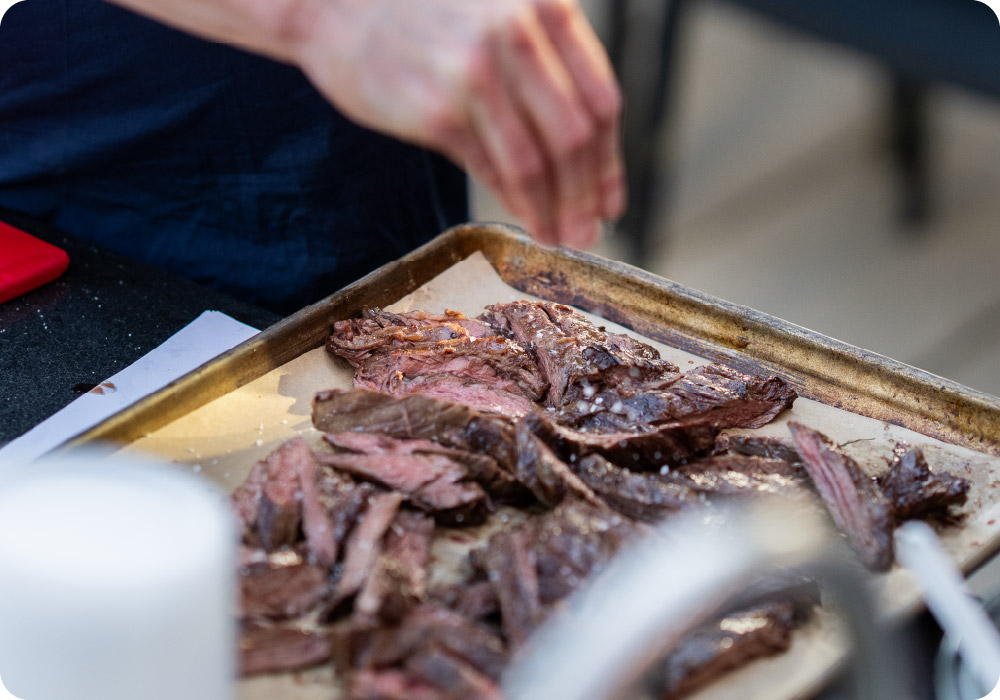
Serves 4 to 6
Ingredients
1 hanger steak (about 1 1⁄2 lbs.)
2 teaspoons salt, divided
1 head garlic, smashed and divided
1 lemon zested and juiced
1⁄2 cup extra-virgin olive oil, divided
1⁄4 cup red wine vinegar
1 tablespoon dried oregano
1 bunch parsley
1 bunch basil
2 large tomatoes, chopped
1 cup bocconcini mozzarella, halved
Directions
Season the steak with 1 1⁄2 teaspoons of the salt and place the steak in a resealable bag or in a large bowl. Add half of the garlic, lemon zest, juice, 1⁄4 cup of the olive oil, the red wine vinegar, and the oregano. Mix and cover for at least 30 minutes or up to 6 hours.
Preheat your grill to medium-high heat.
Sear the steak on both sides for 5 minutes for medium rare. Rest for 10 minutes.
While the steak is resting, roughly chop together the parsley, basil, the remaining cloves of garlic, and 1⁄2 teaspoon of salt. Stir in the tomatoes, mozzarella, and remaining 1⁄4 cup of olive oil.
Slice steak and top with dressing.
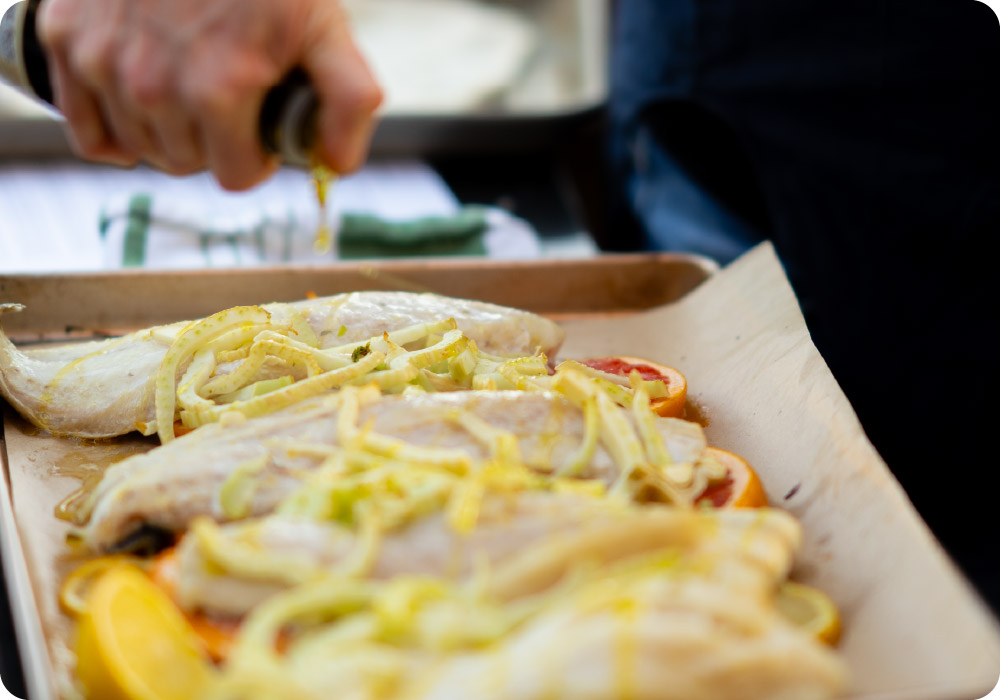
Serves 2-4
This dish is inspired by the flavors of my travels to South America but adapted in a more simplified, weeknight-friendly way; perfect for the home cook. Fish will always marry well with citrus and salt.
There is little you can do to mess this up. Any white, flaky fish such as halibut, cod, or flounder work nicely for this.
Ingredients
1 orange or grapefruit, any variety
1 lb. flaky white fish
Salt, to taste
Extra-virgin olive oil
1 fennel bulb, fronds reserved
1 lemon
Directions
Preheat oven to 400° F.
Slice citrus into 1⁄4-inch slices and lay flat on a sheet tray. Season citrus with salt and drizzle with olive oil. Lay fish over fish and season again with salt and olive oil.
Thinly slice fennel and season with salt, olive oil, and 1⁄2 lemon, juiced. Mound fennel slices over the fish and bake for 10-12 minutes until fish is completely opaque and cooked through.
Remove fish from oven and, for good measure, drizzle with more olive oil and the remaining lemon juice. Garnish with fennel fronds.
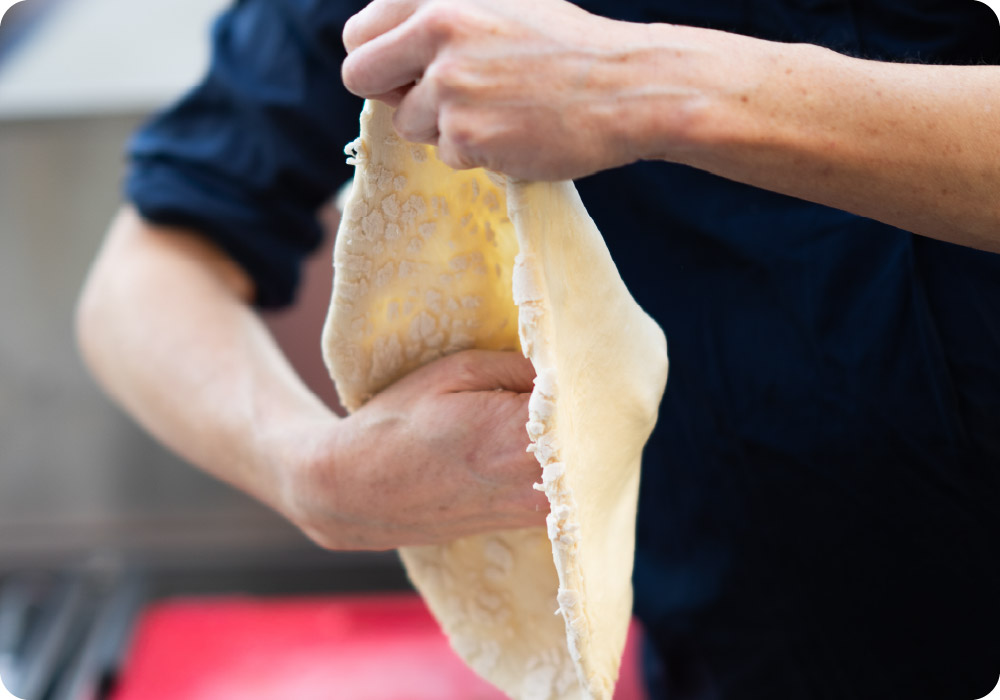
Serves 4 to 6
Ingredients
1 pizza dough
1⁄2 cup fig jam
1⁄2 pound fresh mozzarella
1 cup Gruyère cheese
4 cups arugula
1 pint fresh figs, if available, stem removed and halved
1⁄4 teaspoon salt
1 lemon
2 tablespoons extra-virgin olive oil
Directions
Preheat your grill to medium-high heat.
Stretch dough into desired shape, as you would a traditional pizza.
Grill on one side for 1 to 2 minutes, or until nicely charred. Flip the pizza, reduce the heat to low and top with the fig jam, mozzarella, and Gruyère. Close the top of the grill for 1 to 2 minutes to melt the cheese.
Remove the flatbread from the grill and top with the arugula and fresh figs. Season the flatbread with the salt, lemon juice, and olive oil. Cut and serve.
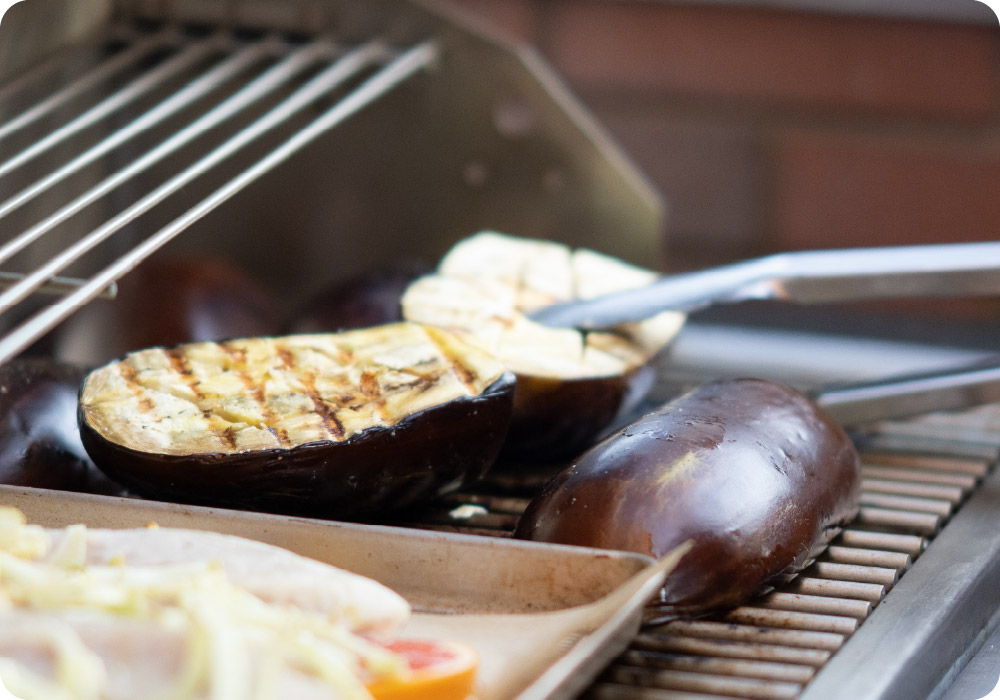
Serves 4 to 6
Ingredients
2 large eggplants, cut into 1⁄4-inch rounds
Salt
Extra-virgin olive oil
1⁄4 cup tahini
2 tablespoons chopped fresh cilantro
1 tablespoon chopped fresh dill
Directions
Heat your grill to medium high.
Season the eggplant with a dusting of salt and allow the eggplant slices to “sweat” while the grill comes up to temperature. Pat dry with a paper towel. Season the eggplant again with a dusting of salt and drizzle with olive oil. Grill for 4 to 5 minutes per side, or until charred and tender.
Place the grilled eggplant on a platter.
In a bowl, whisk together the tahini with a few tablespoons of water, just enough so the consistency is drizzle-worthy. Stir in the cilantro and dill and then garnish the eggplant with the tahini dressing.
The Related Life is written and produced by the Related Life Editorial Team. Be sure to follow us on Facebook and Instagram for the latest events, news, and announcements in your area, and tag us for a chance to be featured @therelatedlife and #therelatedlife.